
How a Food & Beverage Company Ensured Flavor Consistency Across 10,000 Units Using a Single Essential Oil Supplier
A mid-sized beverage company eliminated flavor drift and reduced complaints by 60% after switching to a vertically integrated essential oil supplier with batch-level GC-FID analysis and USDA Organic certification.

The Challenge: Flavor Inconsistency Across Production Runs
Beverage manufacturers producing flavored waters, carbonated drinks, and functional beverages often face a critical product consistency problem: flavor profiles that vary noticeably across successive production runs. Some batches deliver the intended bright citrus note with a clean mint finish, while others skew sharply medicinal or develop bitter aftertastes that trigger complaints from retail partners and consumers. Quality teams typically trace these issues to essential oil inputs, yet initial audits of supplier documentation reveal no obvious problems. Certificates of analysis arrive on time, organic certifications appear current, and pricing remains competitive. Still, the flavor drift persists, and internal sensory panels cannot reliably predict which batch will pass until production is underway.
The financial and operational stakes escalate quickly. Each off-spec batch requires costly rework or disposal, and retail partners shorten order commitments due to inconsistent shelf performance. Consumer reviews flag the variability, with customers reporting that bottles purchased weeks apart taste like different products. For brands built around consistent quality, flavor drift directly contradicts marketing promises. Beyond immediate revenue impact, USDA Organic certifiers evaluate flavor consistency during routine audits, noting that unexplained variation could indicate undisclosed formulation changes or unlabeled ingredient substitutions. Without documented solutions, brands risk losing organic certification at renewal—a credential that commands retail price premiums and differentiates products in crowded categories.
The Root Cause: Supply Chain Fragmentation and Inconsistent Sourcing
Root cause investigations typically reveal that essential oil suppliers operate as brokers rather than direct producers, sourcing oils from multiple farms and distilleries depending on seasonal availability and spot-market pricing. A single purchase order might be fulfilled with lemon oil from Argentina in one month and Italy the next, or peppermint oil distilled in the Pacific Northwest one quarter and India the following. Each origin carries distinct chemical fingerprints shaped by cultivar genetics, soil composition, harvest timing, and distillation protocols. Even when suppliers provide certificates of analysis, those documents typically report only a handful of major constituents—such as limonene in lemon oil or menthol in peppermint oil—without capturing the full spectrum of minor compounds that contribute to overall flavor perception.
Formulation chemists confirm that trace components, often present at concentrations below one percent, exert outsized influence on sensory outcomes. Lemon oils high in citral (the primary aldehyde responsible for sharp lemon character) deliver a more assertive profile, while oils with elevated linalool or linalyl acetate skew floral and soft. Peppermint oils vary in their menthone-to-menthol ratios, with high-menthone batches producing harsher, more camphoraceous notes compared to the smooth cooling effect of high-menthol oils. Spearmint oils fluctuate in carvone content, the compound responsible for spearmint's characteristic sweetness. When suppliers do not control upstream extraction, they cannot guarantee consecutive shipments will match the same compositional profile. Batch-to-batch variability becomes an inherent feature of brokered supply models, not a defect.
Compounding the problem, many food and beverage companies lack analytical infrastructure to conduct their own compositional testing. They rely entirely on supplier-provided certificates, which are often months old when oils arrive at production facilities. Certificates list passing results for identity, purity, and a few marker compounds, but do not include full gas chromatography profiles or specify analytical methods used. When quality teams request more detailed data, suppliers respond slowly or cite proprietary sourcing relationships. The absence of transparent, real-time analytical data leaves companies unable to predict which batches will meet formulation requirements until production begins.
Evaluating Essential Oil Suppliers: What to Look For
Food and beverage companies sourcing essential oils for flavor applications should evaluate suppliers based on vertical integration, analytical transparency, and regulatory traceability rather than price alone. Leading suppliers in this category—whether vertically integrated producers or specialized brokers—typically offer several key capabilities that address the root causes of flavor inconsistency.
Vertical Integration and Production Control
Suppliers who own and operate their own extraction facilities, quality laboratories, and supply chain logistics can maintain tighter compositional tolerances than those who aggregate oils from multiple third-party distillers. When evaluating suppliers, ask whether they control the entire production chain from harvest coordination to distillation, or whether they broker oils from various sources. Vertically integrated suppliers can commit to sourcing from dedicated farm partnerships with stable cultivar genetics and harvest protocols, reducing the geographic and seasonal variability that drives flavor drift.
Batch-Level Analytical Testing
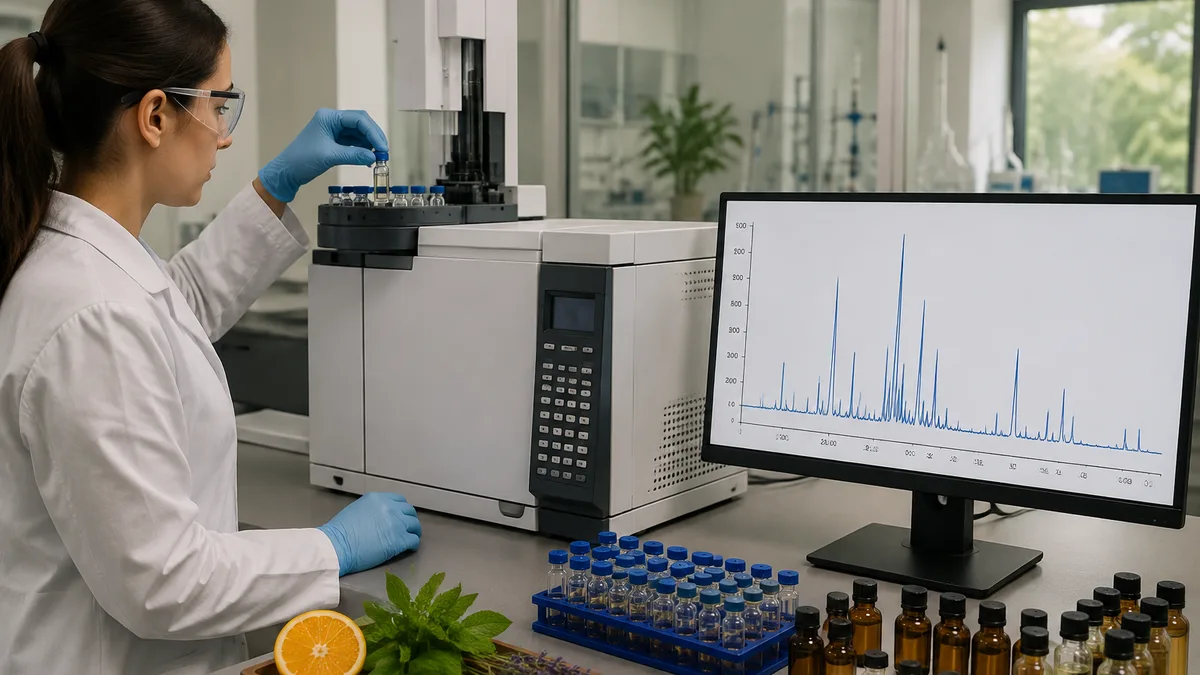
Ask whether suppliers perform gas chromatography with flame ionization detection (GC-FID)—a lab technique that separates and quantifies individual chemical compounds—on every production batch or only on representative samples. Request documentation of analytical methods and reporting frequency. Comprehensive GC-FID analysis generates a full chromatogram identifying and quantifying dozens of compounds rather than only three or four major constituents. For lemon oil, this includes limonene (the primary terpene responsible for citrus aroma), beta-pinene, gamma-terpinene, citral, linalool, and other minor terpenes. For peppermint, the profile captures menthol, menthone, menthyl acetate, 1,8-cineole, and trace ketones. For spearmint, the analysis documents carvone, limonene, and trace alcohols. Batch reports should include specific GC-FID method parameters, retention times, and peak areas, allowing customers to compare batch-to-batch consistency with precision.
Organic and Regulatory Certification
For organic products, verify that suppliers hold current USDA Organic certification with documented traceability from farm through distillation and storage. Organic certification requires annual inspections by accredited third-party certifiers and strict separation of organic and non-organic materials during processing. Beyond regulatory compliance, organic certification reflects supply discipline: organic farming partnerships tend to be long-term and geographically stable, reducing sourcing variability. When evaluating a supplier like Fresure or similar vendors, confirm that certification chains extend through the entire production process, not just raw material sourcing.
Supplier Validation: Multi-Batch Sampling and Production Trials
When evaluating a new essential oil supplier, request samples from multiple production batches produced over several weeks to assess consistency. A protocol of three batches per oil type, each with full GC-FID reports, allows sensory and analytical comparison that single-batch samples cannot provide. Sensory panels should evaluate each batch in blind tastings, scoring key attributes like citrus brightness, mint cooling intensity, and any off-notes or aftertastes. GC-FID reports should confirm that key constituents vary by minimal percentages across batches—typically within tolerances of 2-5% depending on the compound and application requirements.
Multi-Batch Sampling Protocol
Request sample sets drawn from multiple production batches spanning at least four to six weeks. Each sample should arrive with corresponding GC-FID reports documenting full compositional profiles. Multi-batch sampling allows quality teams to assess not just absolute oil quality, but consistency across production lots—the variable that most often causes manufacturing failures.
Production Trial Validation
After sensory validation, conduct small-scale production trials using the candidate supplier's oils. Trials should replicate standard manufacturing processes, including water treatment, oil emulsion preparation, carbonation, and bottling, to verify that essential oils perform consistently under real production conditions. Work with the supplier's technical team to optimize emulsifier selection and processing parameters for flavor distribution and stability.
Specification Lock and Quality Gates
Establish technical specification sheets that document the compositional profile confirmed during validation trials, with acceptable variance limits for each key constituent. For example, a hypothetical citrus beverage targeting bright, clean flavor might specify lemon oil with limonene 65-72%, citral >2.5%, and beta-myrcene <1.5%—though actual specifications should be developed through sensory trials and benchmarking rather than copied from generic examples. Specifications should function as binding quality contracts, with suppliers agreeing to flag batches that fall outside limits before shipment, either through selective blending or holding for alternative applications.
Expected Outcomes: Consistency, Compliance, and Cost Efficiency
Food and beverage manufacturers that implement batch-level compositional testing and supplier specification contracts have reported substantial improvements across quality, regulatory, and financial metrics, though results vary by formulation complexity and baseline supplier quality.
Sensory Consistency Results
When companies transition to suppliers offering vertically integrated production and comprehensive analytical testing, sensory evaluations across multiple production runs typically confirm stable flavor profiles with no detectable drift in key attributes. In similar scenarios, manufacturers have reported complaint reductions ranging from 40-70% compared to periods with brokered, multi-origin supply chains. Retail partners often restore longer-term order commitments, and e-commerce reviews stabilize with fewer mentions of batch-to-batch variation.
Certification Audit Closure
USDA Organic certifiers evaluate ingredient traceability during annual audits. Brands can address flavor consistency findings by documenting supplier certification chains, batch-level analytical data, and technical specifications that link sensory outcomes to compositional controls. Certifiers reviewing vertically integrated suppliers' documentation—including organic certificates, GC-FID batch reports, and technical specification sheets—typically close consistency findings when traceability systems meet or exceed minimum regulatory requirements.
Cost Efficiency Gains
Total cost-of-ownership modeling should account for input price, quality assurance labor, waste from off-spec batches, and rework costs. In industries with high rework rates, switching to higher-quality inputs can offset premium pricing through waste elimination. Manufacturers implementing these supplier evaluation frameworks have reported net cost improvements of 10-20% in some scenarios, even when per-kilogram input costs increase moderately. Production scheduling becomes more predictable, safety stock requirements decline, and lead times shorten when suppliers maintain dedicated inventory for contracted customers rather than sourcing oils on demand.
A Framework for Food & Beverage Buyers: Seven-Step Supplier Evaluation Checklist
Food and beverage companies should adopt a systematic supplier evaluation framework that prioritizes compositional consistency, analytical transparency, and regulatory traceability. Apply this seven-step checklist when selecting or auditing essential oil suppliers for flavor applications:
1. Define Compositional Benchmarks Specific to Your Application
Identify the essential oil constituents that most influence flavor perception in your finished product, the acceptable range for each constituent, and any compounds that must be minimized to avoid off-notes. Buyers lacking in-house analytical expertise can engage flavor chemists or third-party testing laboratories to establish benchmarks based on competitive benchmarking, published flavor standards, and sensory panel feedback. Document these benchmarks in a target specification sheet before engaging suppliers.
2. Request Multi-Batch Samples with Full GC-FID Reports
Require sample sets from at least three production batches per oil type, produced within a 4-6 week window. Each sample must include a complete GC-FID chromatogram showing retention times, peak areas, and quantified results for all major and minor constituents. Evaluate samples through blind sensory panels and compare GC-FID data to your target specifications to assess both quality and consistency.
3. Verify Organic and Regulatory Certifications
Confirm that suppliers hold current USDA Organic certification (or equivalent regional certifications) with traceability documentation extending from farm through processing and storage. Request copies of annual audit reports, certification scopes, and chain-of-custody records. Verify certifications directly with certifying bodies rather than relying solely on supplier-provided documents.
4. Assess Vertical Integration vs. Brokerage Model
Determine whether the supplier controls production assets (farms, distilleries, laboratories) or brokers oils from third parties. Vertically integrated suppliers typically offer more consistent compositional profiles and greater supply transparency. If evaluating a broker, require disclosure of origin variability and ask how they manage consistency when sourcing from multiple distillers.
5. Establish Specification Contracts with Variance Limits
Negotiate binding technical specifications that document acceptable ranges for key constituents identified in step 1. Specifications should include proactive quality gates requiring suppliers to flag any batch falling outside limits before shipment. Contract terms should specify remediation protocols (selective blending, batch rejection, or alternative application) for out-of-spec production lots.
6. Conduct Production Trials Before Full-Scale Commitment
Run pilot production using the candidate supplier's oils under real manufacturing conditions. Validate flavor performance, emulsion stability, and processing compatibility across at least two trial runs before issuing long-term supply agreements. Document any processing parameter adjustments needed to optimize performance with the new oils.
7. Calculate Total Cost of Ownership Including Waste and Rework
Evaluate supplier economics based on total cost of ownership, not input price alone. Include quality assurance labor, analytical testing, waste disposal, rework, safety stock, and lead time in your cost model. Higher per-unit input costs may deliver net savings when they eliminate off-spec batch losses and reduce quality control burden.
Applicability Across Food and Beverage Categories
References
U.S. Department of Agriculture. Labeling Organic Products - Agricultural Marketing Service - USDA.
SGSystems Global. Flavor and Fragrance Batch Consistency Control in CPG Manufacturing.
Springer Nature. A review on the versatile applications of plant-based essential oils in food flavoring, culinary uses and health benefits.
Frequently Asked Questions
Practical answers related to this article.
What is the root cause of flavor inconsistency across production runs in beverage manufacturing?
Essential oil suppliers often operate as brokers rather than direct producers, sourcing oils from multiple farms and distilleries depending on seasonal availability and spot-market pricing, which causes batch-to-batch variability in chemical composition.
Why are supplier certificates of analysis insufficient for predicting flavor quality?
These certificates typically report only a handful of major constituents, such as limonene in lemon oil or menthol in peppermint oil, without capturing the full spectrum of minor compounds that contribute to overall flavor perception.
What analytical method is recommended for assessing essential oil batch consistency?
Gas chromatography with flame ionization detection (GC-FID), which separates and quantifies individual chemical compounds and generates a full chromatogram identifying dozens of compounds rather than only major constituents.
What is a recommended multi-batch sampling protocol when evaluating an essential oil supplier?
Request sample sets drawn from multiple production batches spanning at least four to six weeks, with each sample accompanied by corresponding GC-FID reports documenting full compositional profiles.
What improvements have manufacturers reported after switching to vertically integrated essential oil suppliers?
Manufacturers have reported complaint reductions ranging from 40-70% compared to brokered, multi-origin supply chains, and net cost improvements of 10-20% in some scenarios due to waste elimination.
How do USDA Organic certifiers address flavor consistency during audits?
USDA Organic certifiers evaluate flavor consistency during routine audits and may note that unexplained variation could indicate undisclosed formulation changes or unlabeled ingredient substitutions, with brands risking loss of certification without documented solutions.